
Notetaker Clasp
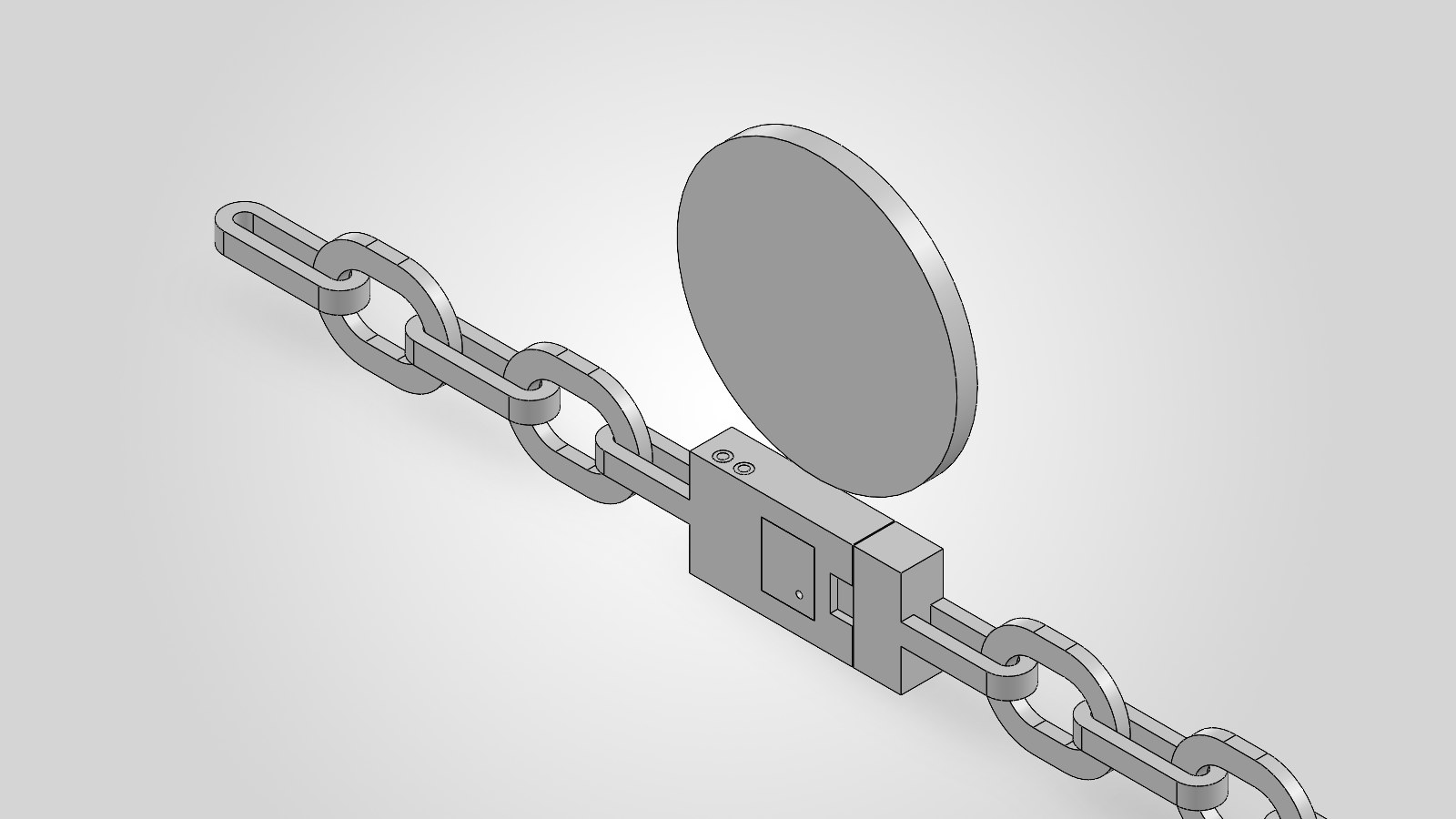
A voice-note recorder built into the clasp of a 10 mm Cuban link bracelet. It's designed in CAD but not built yet.
What it does
You tap the clasp to start recording a voice note, and it streams the audio to your phone over Bluetooth. It only records when you tap it, and from the outside it looks like an ordinary bracelet clasp.
Technical details
- Enclosure
- 20 x 10 x 4 mm titanium clasp in two halves, with 0.5 mm walls. The parts go in from below, and a titanium cover is laser-welded over them.
- Closure
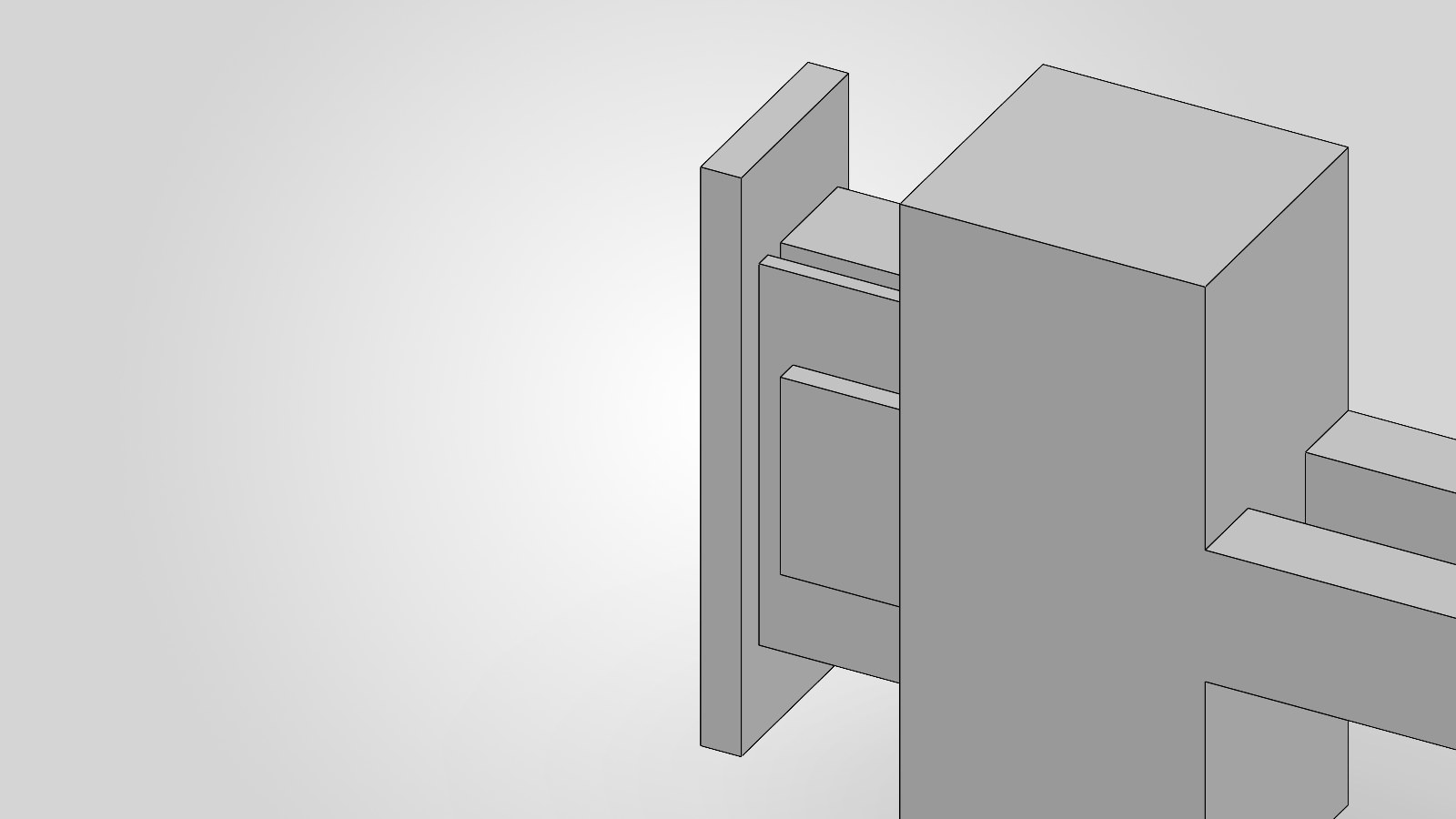
- A magnet pulls the halves together and a spring latch locks them
- Electronics
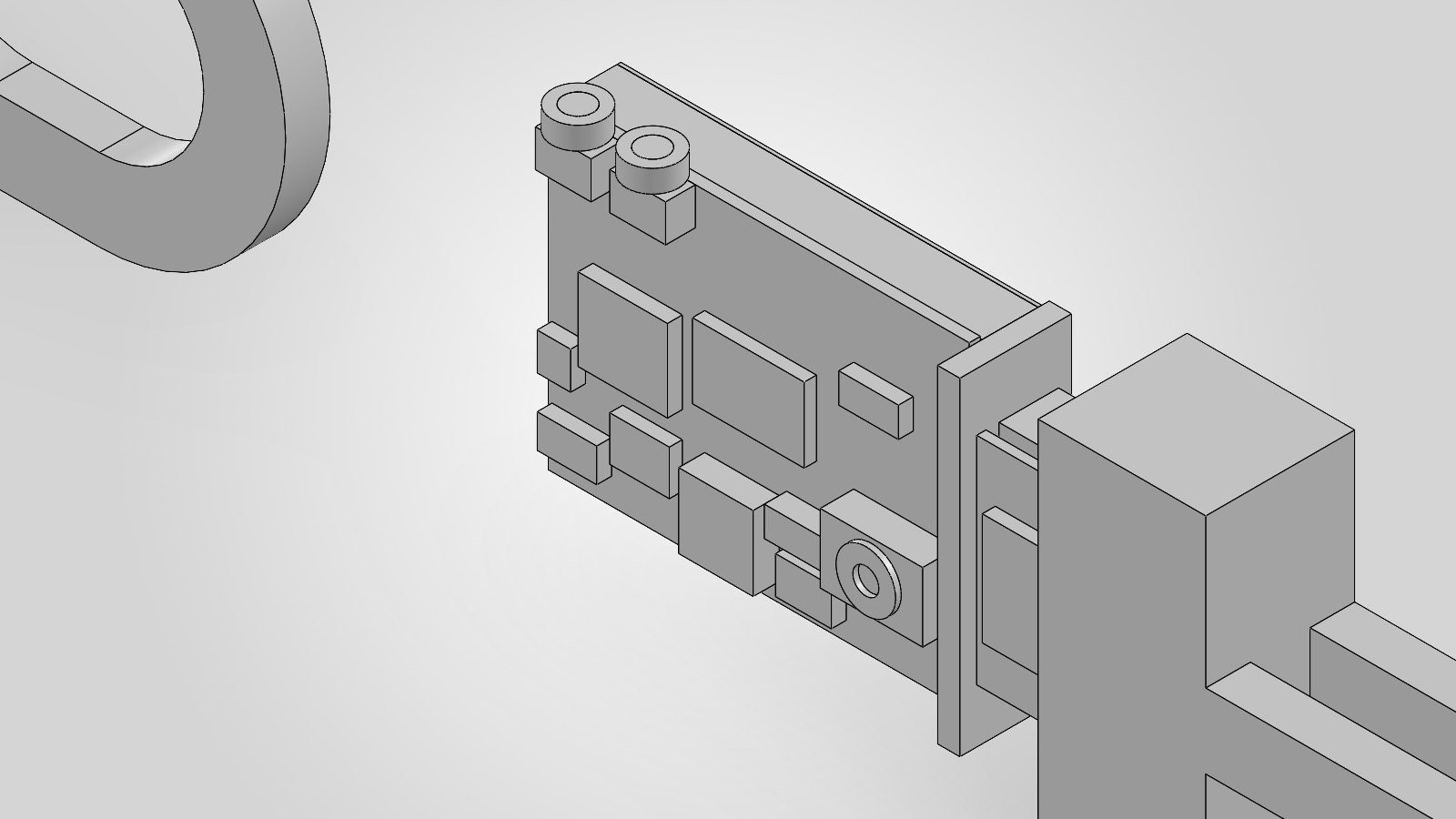
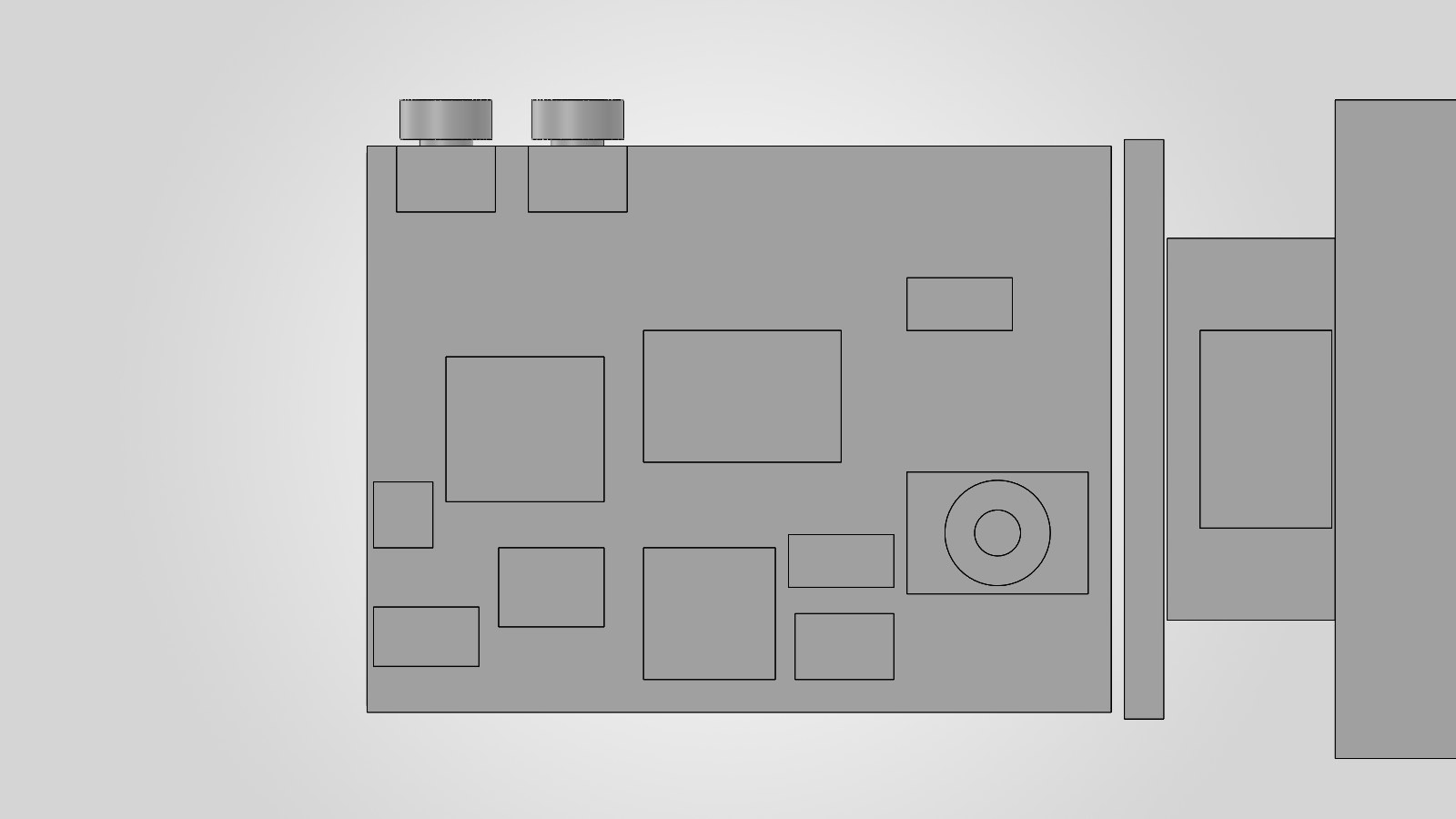
- Nordic nRF54L15 Bluetooth chip, MEMS microphone, tap-sensing accelerometer, charger and a buck converter on one 0.3 mm board
- Battery
- Custom 1.5 mm lithium polymer cell under the board, about 9 to 11 mAh
- Charging
- Two gold pins on the side of the clasp
- Model
- SolidWorks, 34 bodies, generated from a parametric Python build script
Design decisions
Fit
The inside of the clasp is 3.0 mm tall, and the stack fills it exactly: a 0.1 mm foam pad, the 1.5 mm battery, the 0.3 mm board and a 0.9 mm microphone sealed to the window. An interference check across all 34 bodies found no collisions with the clasp modeled closed, and every part on the board has at least 0.2 mm of space around it.
Size
The first version was a 27 x 10 x 6.5 mm box clasp. Switching to a magnetic latch, a thin battery and a single-layer board brought it to 20 x 10 x 4 mm, less than half the volume.
Battery life
About 2 to 3 hours of recording, estimated from the chip's rated current.
Engineering decisions
A latch spring sized to last
The safety catch is a 0.25 mm spring that pushes a 2 mm release button up into a window in the shell. I ran it 1.5 mm back into the latch half so it's 4 mm long, which keeps the bend to 0.6% when you press the button, well below what titanium can take.
A window that does three jobs
Metal blocks Bluetooth, so the top of the clasp has a zirconia ceramic window. The antenna sits under it, the microphone hears through a 0.6 mm hole in it, and it's where you tap.
What I'd do next
- 3D print the shell at full size to see how it looks on the wrist, and print the latch at 3x scale to test the click.
- Measure a real 10 mm Cuban clasp and adjust the model to match.
- Prototype the electronics on Nordic's development kit.